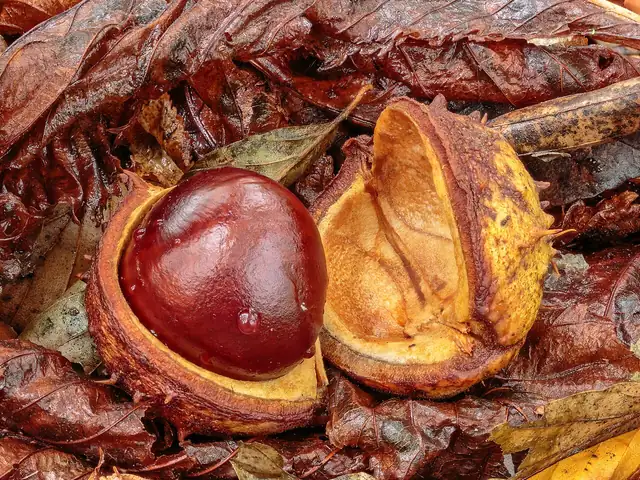
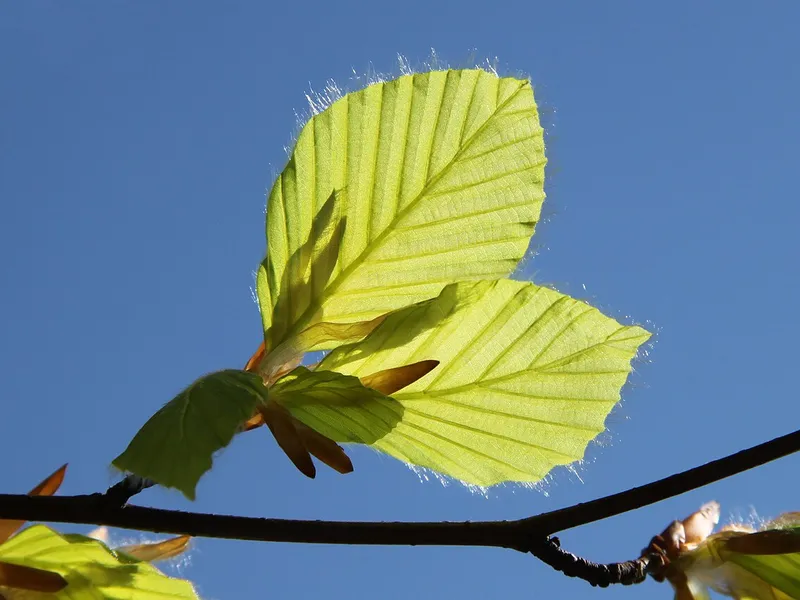
The horse chestnut often grows in schoolyards and along avenues. In April its sticky buds burst, and in May white flower spikes like candles appear. The shiny brown fruits fall in autumn. They are not edible and are not related to the sweet chestnut.
The horse chestnut grows wild only in the mountains of the southern Balkans, but it is planted as an ornamental tree all over Europe. Its flowers have a yellow spot that turns red after pollination. This tells bees that the flower has no more nectar. The fruits contain aescin and are poisonous to people.
Club observations
The club has not recorded this yet. The first record draws the first dot on the circle, and each year adds another.