Nose-horned viper
Vipera ammodytes · Spring and autumn
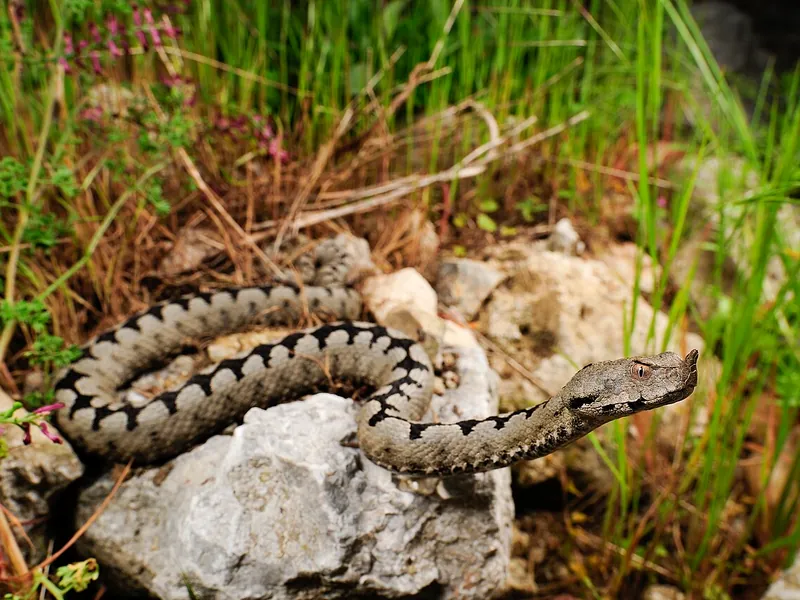
The nose-horned viper is our most venomous snake. We recognise it by the zigzag dark stripe on its back and the small horn-like bump on the tip of its snout. It likes dry, stony places. It sleeps through the winter in hiding and in spring comes out to bask in the sun for the first time. If we see one, we keep our distance and do not touch it.
Through the year
More detail
The nose-horned viper is cold-blooded, so its body takes on the temperature of its surroundings. That is why it hibernates in winter, for two to six months depending on how cold it is. It mates in April and May, and the young are born at the end of summer and in autumn. The viper is not aggressive and bites only when it feels threatened.
Club observations
The club has not recorded this yet. The first record draws the first dot on the circle, and each year adds another.